Plant-based alternatives contain twice as many additives as animal products, new UK study finds
In 71 like-for-like products, plant-based alternatives also contained 456 more ingredients
This additional information is included as part of a press release labeling system introduced by the Academy of Medical Sciences and Science Media Centre. For more details click here.
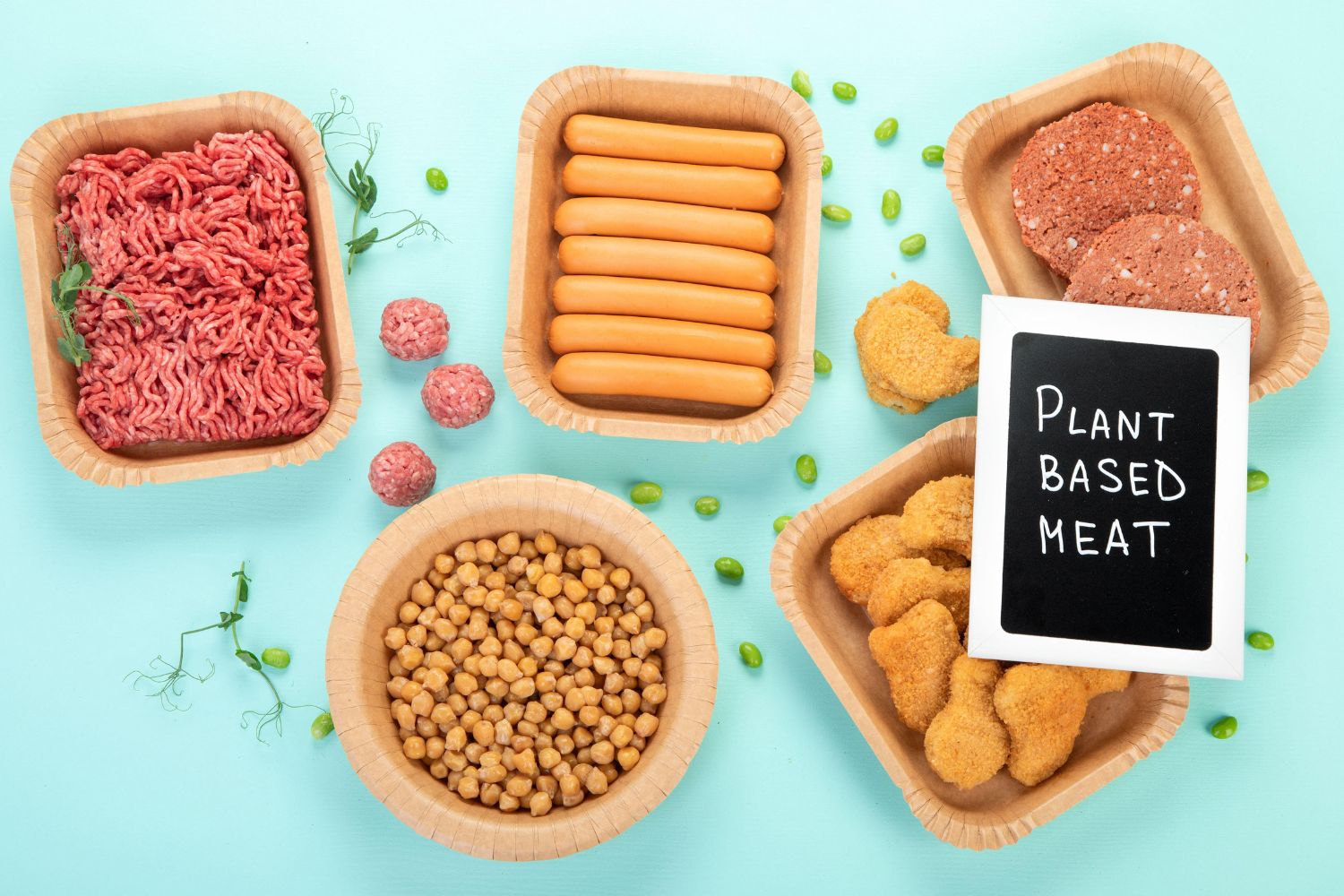
Image by Tatjana Baibakova via Alamy.
A first-of-its-kind study of supermarket products has found that in total the plant-based items sampled contained twice as many food additives as the animal-based equivalents.
Overall, the plant-based products contained more additives, more ingredients and more E-numbers than their animal-based counterparts.
A team from the Institute for Optimum Nutrition in London (a provider of university-accredited courses in nutrition) led the research which is published today in the peer-reviewed journal, Food Additives & Contaminants: Part A.
Joseph Whittaker, Vivienne Alexa Robinson and Elouise Redmayne looked at 71 like-for-like pairs of animal-based and plant-based products from an unidentified UK supermarket, that were available on the shelves in late-October 2025.
The team matched the products with each other based on a variety of factors such as the ingredients, packaging, and size, to achieve the closest match possible. So, for instance, almond milk was paired with normal milk, vegan brownies with dairy-based brownies, and plant-based meat with regular meat. Other products included were lasagne, coleslaw, pesto, mayonnaise, yoghurt and cake.
The product range used was marketed as plant-based, but all the products were also vegan.
Overall, results showed:
- the total number of food additives in the plant-based products was 199 compared with 100 in their corresponding animal-based equivalents.
- the total ingredients in the plant-based range was 1,566. In the animal-based range, it was 1,110.
- there were 39 E-numbers in the plant-based range and 31 in the animal-based set. (In total, 50 E-numbers were identified, of which 20 appeared in both groups.)
Across additives, ingredients and E-numbers, the difference between plant-based and animal-based was most stark in dairy, meat and fish products and their plant-based replacement.
“We found roughly twice as many food additives in the total sample of plant-based products compared to animal-based ones: 199 versus 100,” states senior author Joseph Whittaker, a lecturer at ION.
“However, even though we found that plant-based products had more food additives this does not necessarily mean an increased health risk. First, we only analysed one product range so we can’t make generalisations to all plant-based products. Second, we didn’t assess the quantity or concentration of food additives used, nor how much or how often people eat these products, so, essentially, we don’t know the level of exposure of food additives from these products. And last, all food additives used in these products have passed UK food safety regulations.”
Plant-based eating is on the rise. UK survey data shows a trend of declining meat consumption – from 103.7 to 86.3 g per capita per day in the decade to 2018–2019*. US dietary survey data reveals that the proportion of adults consuming a plant-based diet increased from 14.4% to 17.2% between 1999–2000 and 2017–2020**. And a Flemish study found that the number of adult ‘flexitarians’ rose from 5.3% to 9.2% from 2011 to 2020***.
Joseph adds: “Our study comes at a particularly important time as plant-based diets are increasing in popularity and more people are turning to plant-based alternatives products, but people are also concerned about the number of food additives in their food. This is known as the ‘clean label trend’. They are also trying to avoid ultra-processed foods and their potential negative effects upon health, although our study wasn’t focused on this.”
The main limitation of the research carried out was the limited sample of products used – from just one supermarket range.
The author team suggest future research should aim to see if the findings are replicated in other product ranges, including different brands and products available in other countries. “If future findings are consistent with ours, we could start to generalise more about plant-based products and be more certain in our conclusions,” Joe adds.
“One really interesting area that our study did not assess is the level of processing of plant-based products” he concludes. “It may be the case that many of these products are highly processed, and people switching to a plant-based diet and using a lot of these products, may end up on a highly refined diet. I think further research should test this, particularly as these diets are so popular now.
“I would argue that plant-based dieters should focus on whole-foods that are naturally plant-based, rather than trying to replicate animal-based foods. By necessity many plant-based alternative foods use food additives and refined ingredients, as foods like plant-based meat do not exist in nature.”