Scientific advancement has never been more prolific – so why has trust in science plummeted?
Diseases once thought incurable are now treatable, scientists have photographed black holes and life-saving vaccines were developed in record time, but trust in science has never been lower. So how did we get here?
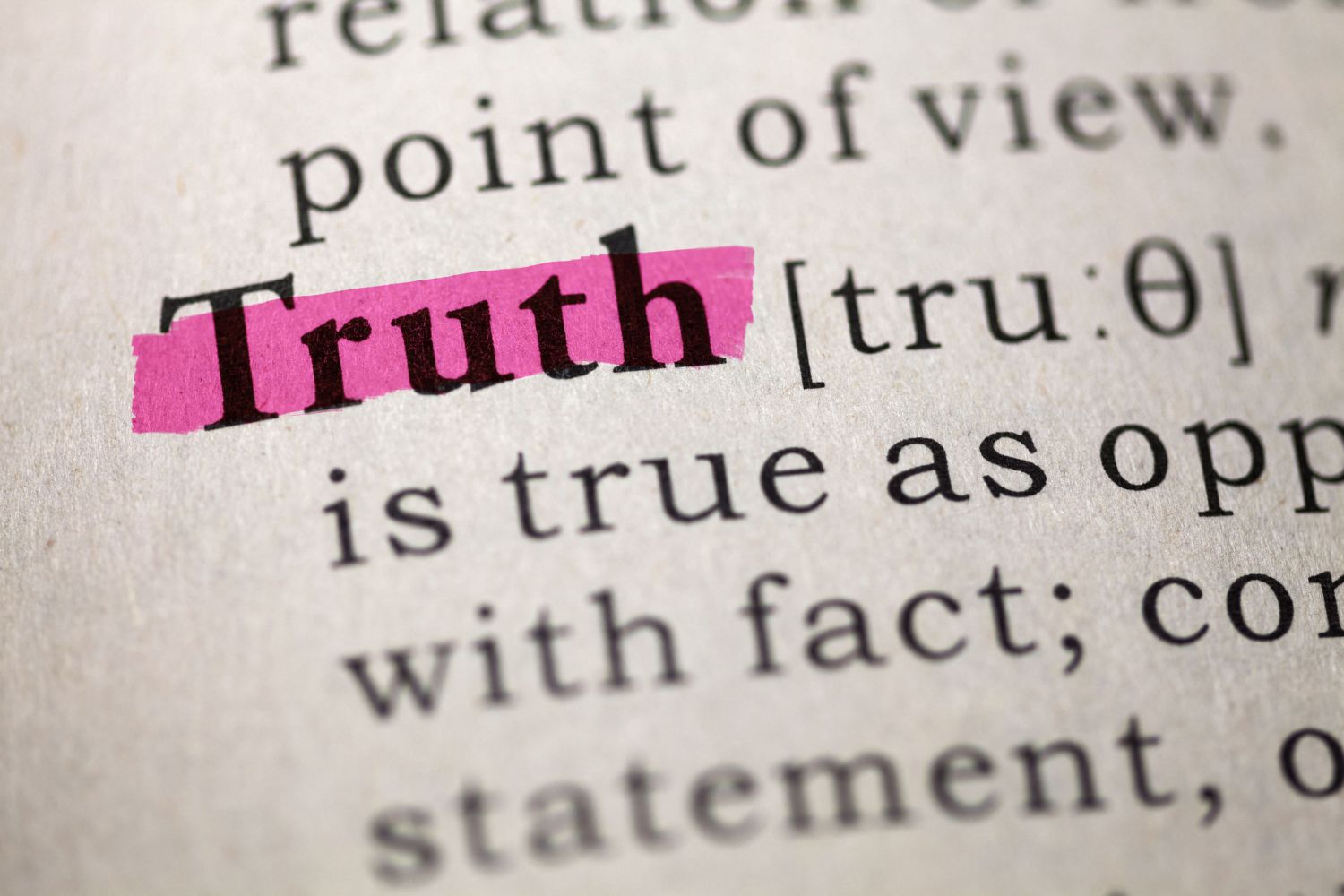
Photo by Feng Yu for Alamy.
From genome editing to quantum computing, scientific progress accelerates at an unprecedented pace, yet public faith in science is collapsing.
Our species has mapped the human genome, created powerful computers that sit in the palms of our hands and extended human lifespans beyond what our ancestors could have imagined – meanwhile anti-intellectualism movements gather pace.
According to Professor Dariusz Jemielniak in his new book Anti-Science: Shortcuts to a Big Idea, it is not due to public ignorance or a failure to communicate science to the masses. Instead, we’re witnessing and living through something far more complex, a fundamental shift in how society relates to knowledge itself.
The trust deficit
“We have entered a period in which the relationship between information and truth has become fundamentally contested,” Professor Jemielniak of Kozminski University explains. “The technologies that promised democratized access to knowledge have also democratized access to falsehood.”
Survey data from the mid-twentieth century showed high levels of confidence in scientists and scientific institutions. Science was associated with progress, prosperity and problem-solving, and the profession itself was well-respected.
Today, that well of public trust has been drained dramatically. There are many complex factors behind this decline, Jemielniak explains, from corporate influence scandals, well-publicised cases of fraud, high profile retractions and the sheer volume of scientific information now produced.
These factors are not enough to erode public trust alone, he explains, but is combined with a perfect storm of digital infrastructure that encourages shock-factor information sharing at speed. Social media algorithms amplify sensational claims regardless of truth value, while echo chambers make it easy to find communities that validate virtually any belief.
“What is historically distinctive is the contemporary infrastructure that accelerates these cycles by rewarding outrage, simplifying complex disputes into identity signals, and turning epistemic conflict into content,” Jemielniak explains.
Some scholars argue humanity is even entering ‘a new Dark Ages driven by anti-intellectualism’. Jemielniak says: “The proliferation of digital platforms has allowed misinformation to spread rapidly, challenging the public’s ability to discern credible information and contributing to this erosion of trust.”
When expertise is alienating
Jemielniak suggests one part of the problem lies in science’s very success – because modern science has become so advanced and therefore specialised, even scientists struggle to understand fields outside their own expertise.
“When people cannot evaluate scientific claims for themselves, they must rely on trust,” he explains. “And when that trust is shaken – by scandal, by conflicting expert opinions, by the sheer alienating complexity of scientific discourse – the door opens for alternative explanations that feel more accessible, more human, more intuitively satisfying.”
This creates what Jemielniak calls ‘epistemic dependence’, where rational belief depends not on direct evidence but on a kind of trust, in trusting the experts have good reasons.
Science vs storytelling
Another part of the problem is how human brains are hardwired. For most of human history, knowledge was shared through stories, from campfires to family gathering to folk stories.
“Narrative is our default mode of understanding the world,” Jemielniak says.
Scientific communication, by contrast, such as peer-reviewed journal articles, statistical analyses, methodology sections, represents a way of establishing credibility that is fundamentally different from the narrative forms our brains evolved to process.
“When someone shares a personal story about how a particular treatment cured their illness, or how their child developed symptoms after receiving a vaccine, that story has emotional power that a statistical analysis of thousands of cases cannot match,” he explains. “The story is concrete, vivid, and personal; the statistics are abstract, dry, and impersonal. We are built to learn from stories, and stories can lead us astray.”
A politicisation problem
Jemielniak also explores how scientific questions have become political battlegrounds and, even more challenging, personal identity markers.
This means that issues such as climate change, vaccine safety, evolution, are no longer empirical questions but markers of group identity.
Research cited in the book reveals a surprising finding: higher scientific literacy actually increased partisan polarisation on climate change, suggesting more scientific knowledge is not the simple answer.
“When acceptance or rejection of scientific consensus becomes a marker of group membership, it becomes resistant to change through traditional means of scientific communication,” Jemielniak explains.
This means people who update their beliefs in response to new evidence risk social costs within their communities, potential estrangement from friends and family.
Research across 158 countries between 2000 and 2019 found that while social media can bolster democracy by facilitating diverse viewpoints, the spread of disinformation is associated with democratic decline. In democracies, high levels of disinformation increase the likelihood of autocratisation. In autocracies, it helps rulers maintain the status quo.
Jemielniak warns that mistrust in science has implications for the foundations of democratic society: “When citizens cannot agree on basic facts, when expertise is dismissed as bias, and when truth becomes merely one opinion among many, the shared epistemic foundation that democracies require begins to crumble.”
Solutions to anti-science sentiment
The solution, Jemielniak argues, is not more science education or better communication – in fact decades of research show that providing more information often does not change attitudes or behaviours.
The barriers are psychological, social, and cultural, Jemielniak points out, not just informational.
“The difference between a vaccine-hesitant parent and a climate scientist is not that one trusts science and the other doesn’t,” he argues. “It’s that they draw the boundaries of trust in different places and for various reasons.”
Understanding those reasons, which may include legitimate concerns about pharmaceutical industry influence or past scientific failures, is essential for rebuilding trust, he suggests.
Instead, he argues for fundamental overhaul of how science engages with the public, one that acknowledges that trust must be earned, not demanded. As social media platforms are designed to maximise clicks and emotional reactions rather than truth, fixing the disinformation problem requires holding these companies accountable, making political ads transparent and supporting quality journalism.
Jemielniak is clear about the consequences: “A society that cannot agree on basic empirical facts – that lacks shared reference points for evaluating claims about the world – faces profound difficulties in governing itself democratically. The politicisation of science is thus not merely a science communication problem or even a political problem, but a challenge to the epistemic foundations of democratic self-governance.”