Why researchers believe screens are making us lonely
More people are dying alone while others are marrying chatbots. Now, sociology explains why digital life is damaging social connection
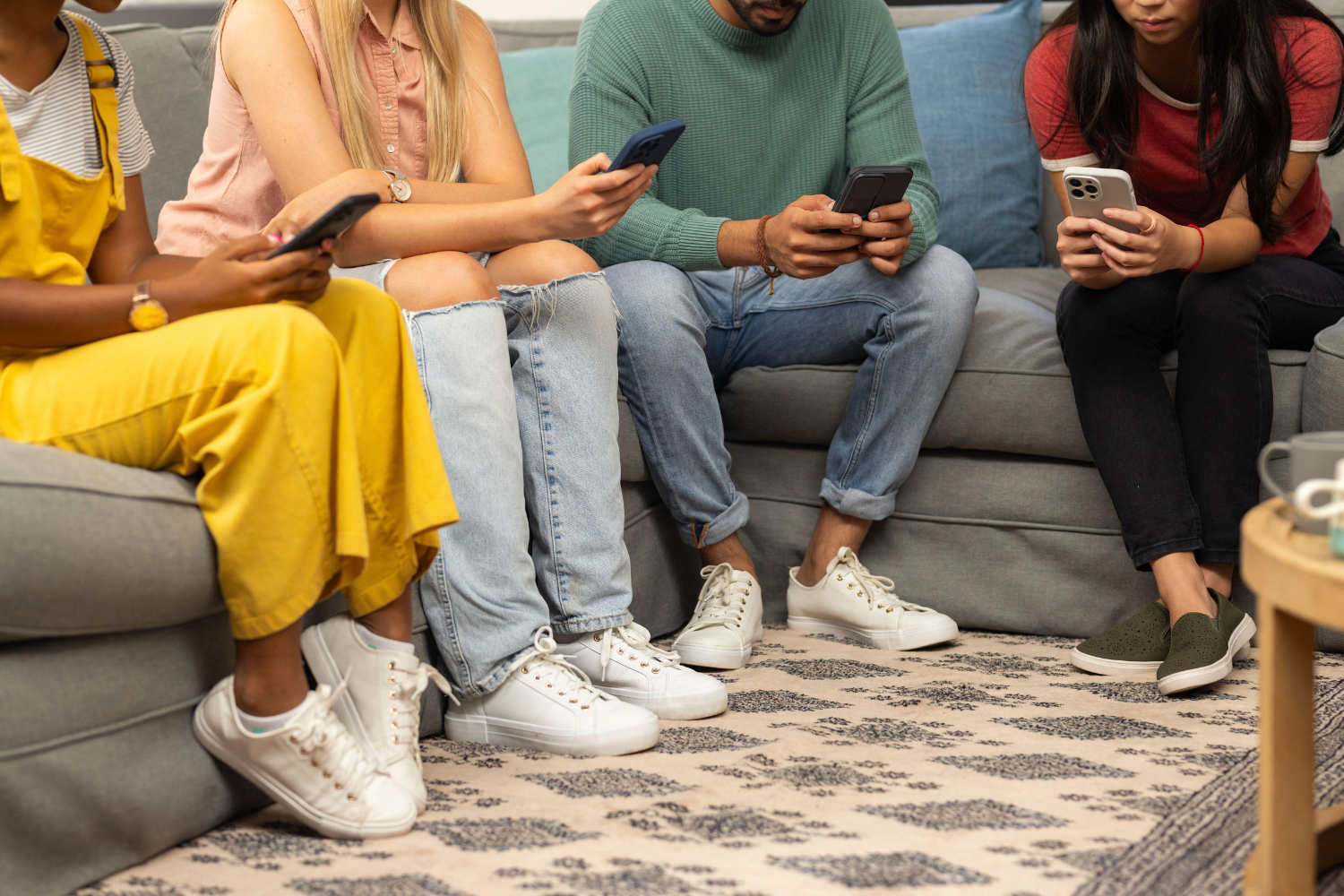
Image by Wavebreak Media LTD for Alamy.
The most dramatic shift in human communication patterns in history is underway – the migration of social life onto screens – and researchers have issued stark warnings about the long-term impact on the health of our social species.
Despite the promise of connection, digital life has produced its opposite, warns Professor of Sociology Vidar Halldorsson. Instead, he says it is reshaping our brains, our communities and our capacity for empathy.
“Social media platforms, algorithmic feeds, and digital interfaces increasingly mediate relationships, replacing human-to-human interaction with human-to-object engagement. The implications are not just cultural or technological; they are profoundly sociological,” he explains, in his new book How Digital Screen Use Alienates Society.
The neuroscience of disconnection
When two people interact face-to-face, their brains synchronise. Neuroscience research shows that during natural conversation, neural activity in the right temporo-parietal junction, a region involved in social cognition, begins to mirror between individuals.
However, this same ‘interpersonal brain synchronisation’ does not occur when people interact through screens.
Face-to-face interaction activates mirror neurons, releases oxytocin and generates what notable sociologist Randall Collins calls ‘emotional energy’, a physiological state of heightened attention and shared feeling. These exchanges build trust, empathy and social bonds.
Screen-based communication, by contrast, is what sociologists describe as ‘cue-poor’. This means it strips away facial micro-expressions, body language, spatial proximity and even smell, all of which carry social information.
In fact, several recent studies on social media use and empathy shows that excessive or addictive screen time correlates with reduced perspective-taking ability.
“While technological rationalism has delivered gains in efficiency and convenience, it has done so by sacrificing human sociality,” Professor Halldorsson of the University of Iceland warns.
The ritual vacuum
Influential sociologist Erving Goffman described everyday encounters, such as the nod to a neighbour, the chat in a queue, the shared smile on public transport, as ‘interaction rituals’. These micro-exchanges seem small, but sociologists insist they perform crucial social work. They generate what another influential sociologist, Émile Durkheim, called ‘collective effervescence’, or the sense of being part of something larger than oneself.
Screens disrupt these rituals. It is common now to see people pass each other without interaction, listening to something on their earbuds or focused on their screens.
The pandemic accelerated this shift. Physical distancing became normalised, and screen-based substitutes – from Zoom worship to virtual fitness classes – were promoted as adequate replacements for physical gathering.
“The interaction ritual chains that once formed the rhythm of daily life, and provided people with security, stability, and human connection, have been disrupted,” Professor Halldorsson says. “Without continuity in these chains, everyday life becomes increasingly liquid, unstructured, and ungrounded.”
Loneliness deaths and AI companions
The consequences of this disconnection can manifest in extremes. In England and Wales, an unsettling trend is emerging from mortality data: the number of people who died alone, with their absence unnoticed for weeks or months, is rising. Research documents this phenomenon as a measurable indicator of social isolation, or what some researchers now call ‘loneliness deaths’.
“One of the consequences associated with the transformative changes in interaction rituals is an epidemic of loneliness that sweeps through modern societies, as people are denied access to rewarding aspects of interaction. People feel increasingly isolated and lonely, as evidenced by actions taken by countries like Britain and Japan, which have appointed specific ministers of loneliness to address this growing problem,” he points out.
At the other extreme, some people are abandoning human connection entirely for artificial alternatives. Recent reports document individuals entering relationships, even ‘marriages’, with AI chatbots.
While these chatbots are designed to be perfect companions, they lack what Professor Halldorsson calls ‘social magic’, the sensory-rich exchanges that generate genuine empathy and trust.
Whether dying alone or ‘marrying’ algorithms, Professor Halldorsson argues both extremes reveal the same issue, the erosion of genuine human connection.
What we are losing
What’s being lost isn’t just socialising, Professor Halldorsson argues, he says humans are losing their ‘sixth sense’, or the tacit awareness that emerges through repeated face-to-face ritual interactions. This sense allows us to read rooms, anticipate reactions and navigate complex social situations. It is how we learn empathy, develop trust and build communities.
“Social interaction is the hinge between the individual and society,,” Halldorsson says. “It is where ‘atoms’ of society come together, strengthening belonging and the comradeship that underpins communities and social life.”
When these micro-interactions disappear, society doesn’t collapse immediately, he suggests, but trust erodes and empathy weakens, changing how society interacts fundamentally over time.
The question facing modern societies, Professor Halldorsson says, is whether technological convenience is worth this cost.
“The new digital rituals that take their place are insufficient to account for the needs of human beings. They fail to provide people with a strong sense of belonging, togetherness, fulfilment, and identity.”