Removal of structural barriers required for widespread adoption of open research in India, high-level roundtable hears
Delegates to Open Horizons: Advancing Open Research in India forum also discuss research integrity and funding for Humanities and Social Sciences
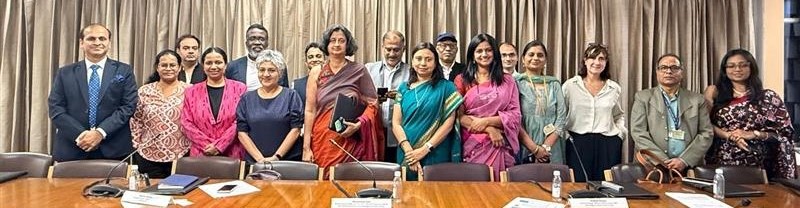
Delegates to Open Horizons: Advancing Open Research in India
The growth of open research practices in India requires traditional research impact metrics to be replaced by assessment of societal impact, policy influence, and data reusability, a roundtable of senior leaders from government, funding agencies, and academic institutions has heard.
Co-organized by Taylor & Francis and IndiaBioscience, the recent Open Horizons: Advancing Open Research in India forum in New Delhi covered a range of priority issues required to foster impactful and trustworthy Indian research, including open research, access equity, and research quality.
India’s research landscape is undergoing significant transformation and delegates celebrated the considerable benefits of the One Nation One Subscription initiative for readers in India. However, they also acknowledged that planning needs to be accelerated at all levels to provide open access publishing support and ensure pioneering work by India’s researchers can make its maximum international impact.
The roundtable was invited to assess the institutional preparedness for open access, with one delegate describing the community “ideologically open but structurally closed”; that there is widespread acceptance of the importance of open research but that infrastructure, rewards and incentives do not currently support these practices. Openness is not a metric by which Indian research outputs are usually measured and participants suggested that more priority should be given to the reusability and societal engagement of research to promote real-world impact.
The benefit of open research for supporting research integrity was also considered in detail, including how research transparency can foster quality and combat the serious threat to trust in Indian research. The consensus opinion was that research integrity needs to become cultural imperative in India rather than a compliance requirement. To make this a reality, the group agreed on the need for integrity programs across all sectors, including standardized training and well-resourced institutional research integrity offices.
The event also covered the importance of supporting Humanities and Social Sciences (HSS) research and the crucial role of HSS for evidence-based policy. Delegates highlighted the serious funding gaps for HSS, at a time when there is heavy investment in STEM, with some suggesting that government intervention is required to protect these areas of research.
Siuli Mitra, Executive Director at IndiaBioscience, said: “Through our partnership with Taylor & Francis Group, IndiaBioscience aims to strengthen conversations that make life science research in India more open, accessible, and connected to the communities it serves. The discussions this year have reaffirmed how essential capacity building, strong infrastructure, and responsible publishing practices are for a robust and trusted scientific ecosystem.”
Nitasha Devasar, VP and Commercial Lead for South Asia & Africa at Taylor & Francis, said: “We are deeply appreciative of the diverse and insightful contributions from all the delegates at the forum. It was inspiring to see a shared commitment to advancing India’s research ecosystem through cross-collaborative and multi-stakeholder partnerships. By breaking down structural barriers and fostering innovative alliances, we can collectively enhance research quality, integrity, and societal impact”
Alongside members of Taylor & Francis and IndiaBioscience leadership, participants included representatives from: the Office of Principal Scientific Adviser; DST-National Council for Science and Technology Communication; BRIC-National Institute of Plant Genome Research; ICMR- Indian Council of Medical Research; South Asian University; Technology Innovation Hub, IIT Delhi; KIIT and Bhubaneswar City Knowledge Innovation Cluster; CGIAR- International Rice Research Institute; Geeta University; and the Indian National Science Academy.