For biodiversity to thrive across Europe, laws should treat wildlife as individuals capable of suffering – experts argue
Comprehensive legal analysis reveals “failures” in wildlife protection laws, which, researchers state, threaten biodiversity despite ambitious conservation frameworks

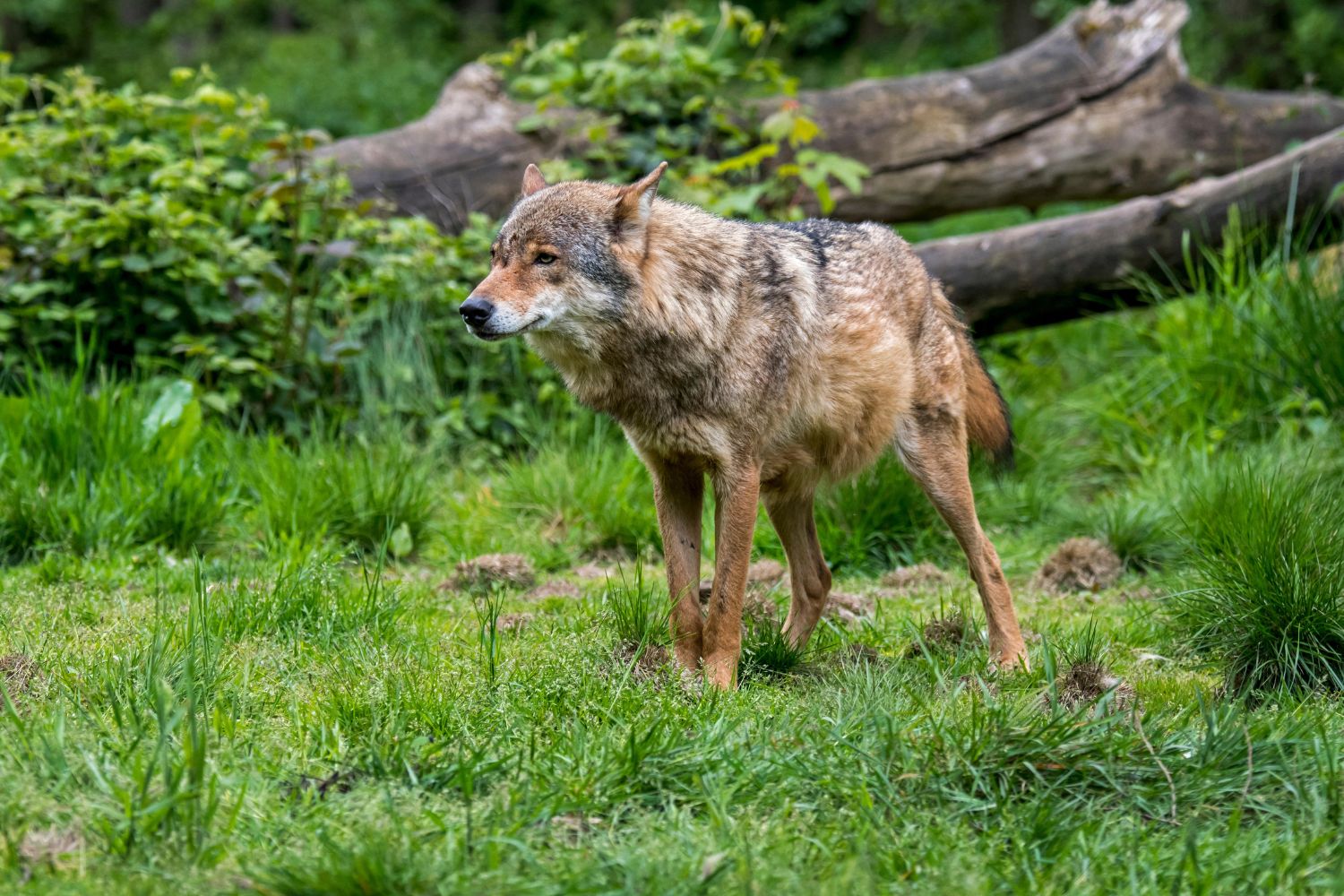
Image by Clement Philippe for Arterra Picture Library on Alamy.
Wildlife protection frameworks in both the EU and the UK need stronger and more consistent implementation – and must recognise animals as “individuals capable of experiencing suffering”, rather than mere ecological assets.
This is the argument from authors of a new peer-reviewed study, which, in providing the first comprehensive comparative examination of EU and UK wildlife legislation in the post-Brexit era, exposes a disconnect between ambitious policy goals and practical implementation.
The research team, environmental lawyers Dr Caroline Cox and Dr Meganne Natali of the University of Portsmouth, reveal significant shortcomings in wildlife protection frameworks across Europe and the United Kingdom, despite decades of legislative development and billions in conservation investment.
Their article is published today in the Journal of International Wildlife Law & Policy.
“Our study finds that while both the EU and the UK have developed complex legal structures for wildlife protection, neither system delivers a coherent or fully effective framework,” Drs Cox and Natali explain.
“In the EU, wildlife protection remains fragmented, selective, and exception-based, with species safeguarded only when expressly listed and protection frequently weakened through exception that allows a national, local or regional administration in an EU member state to deviate from a given regulation (derogations) and political compromise.
“In the UK, outdated legislation and weak enforcement further undermine conservation outcomes.”
Key findings
European Union framework under scrutiny
The research identifies fundamental contradictions within the EU’s wildlife protection system, despite its reputation as one of the world’s most comprehensive:
- Only 16% of habitats listed under the Habitats Directive (an EU environmental legislation designed to protect endangered species and habitats) are currently in “favourable condition”
- 53% of bird species assessed between 2013-2018 showed “unfavourable conservation status” (when a species or habitat is not considered to be in a healthy, secure, and sustainable condition for the long term).
- The EU’s protection system operates through “exceptions rather than universality,” (the way in which EU wildlife laws protects only selected species and habitats, rather than providing protection to wildlife generally) leaving countless species without legal recognition.
UK post-Brexit challenges
The Wildlife and Countryside Act 1981, Britain’s cornerstone wildlife legislation, faces mounting criticism:
- Nearly one in six of the UK’s 10,000+ surveyed species risk extinction
- Only 14% of important wildlife habitats are in good condition
- Wildlife crime conviction rates remain significantly below average for all crimes
- The Act’s five-yearly review system leaves species vulnerable to political shifts and ministerial priorities
An anthropocentric logic
A key problem baked into both of the frameworks is a certain anthropocentric logic, the paper claims. Under this, wildlife is protected because of its value to humans—for example, via ecological services, agricultural balance or landscape aesthetics—rather than for the wildlife themselves.
“Even where animal sentience is recognised at treaty level,” the authors note, such as in EU primary law and the UK’s Animal Welfare (Sentience) Act 2022, “this recognition has not been operationalised within biodiversity law.”
According to the lawyers, the benefit of environmental protections regarding wild animals specifically as sentient beings is that it introduces ‘ethical continuity’ into the legal framework; at present, protection is all too conditional and reversible.
“Species are protected when they serve ecosystem functions of policy objectives—and downgraded when they become politically inconvenient,” the authors add.
The European Wolf controversy highlights a “fragile” protection system
This impermanence is exemplified by the EU’s 2024 decision to downgrade the protection status of wolves from ‘strictly protected’ to ‘protected’, granting greater flexibility in the management of wolf populations, including via culling.
This move has been framed as a response to increasing wolf populations across Europe, and a corresponding increase in conflicts with farmers and hunters.
Although the wolf has been a significant conservation achievement for the EU—with numbers having increased by nearly 60% in a decade—studies have cautioned that wolves have not yet achieved the benchmark of a genuinely favourable conservation status.
Furthermore, Cox and Natali note, the European Commission’s prior analysis in 2023 did not support a reduction in the protection level; it also acknowledged that coexistence measures are more effective at protecting livestock from wolves than culling.
The decision to downgrade the protection of wolves, the authors note, was also “marred by procedural shortcomings”, including a restricted public consultation and a lack of transparency around data on livestock losses and wolf behavior; accompanied by pressure from agricultural and hunting lobbying groups; and surrounded by controversy as to whether the predation of European Commission President Ursula von der Leyen’s pony by wolves influenced the policy shift.
“The wolf downgrade demonstrates how fragile protection can become under pressure,” the researchers note.
Another issue in the EU is that wildlife law only protects those species that are explicitly listed in the annexes of the Habitats and Birds Directive – based on scientific assessments of rarity, conservation status and ecological value at the time of drafting.
“Species outside the annexes receive little to no protection,” Dr Natali says.
“Member States can technically comply while limiting the practical scope of conservation. The result is a framework that appears harmonised, but in reality remains fragile and uneven in application.”
Tightening regimes for greater protection
As for how they would like to see protection frameworks improved in both the EU and the UK, Cox and Natali highlight three areas for improvement.
“First, derogation regimes must be tightened,” they say. “Protection cannot remain structurally dependent on broad ‘overriding public interest’ clauses.”
Secondly, the enforcement of protective measures must be strengthened. As the researchers note: “Legal ambition without monitoring and prosecutorial follow-through produces symbolic protection.”
The third would include enhanced cooperation and coexistence-based approaches. “We advocate stronger cross-border cooperation, better integration of wildlife conservation across policy sectors, and the promotion of human–wildlife coexistence strategies rather than conflict-based management,” Dr Natali adds.
Implications for global conservation
The study’s findings extend beyond Europe, offering lessons for wildlife governance worldwide. As biodiversity loss accelerates globally, the research underscores the urgent need for legal frameworks that balance human interests with ecological integrity and ethical responsibility.
The research team argue that wildlife law must place animal sentience at the heart of conservation frameworks.
“Without that integration, biodiversity law remains ethically incomplete and politically unstable.
“The true measure of environmental law lies not only in its capacity to preserve species, but in its willingness to govern our shared landscapes with justice, empathy, and foresight,” the authors conclude.
With their initial study complete, the researchers are now moving to develop practical recommendations for implementing improvements to existing wildlife protections – examining how these laws could integrate sentience recognition without collapsing into pure welfare regulation – aiming for a coexistence-based framework that bridges biodiversity governance and animal law.