How dogs evolved differently across the globe to match human traits
Research reveals how our canine companions evolved distinct traits in different regions, mirroring the diverse lifestyles of their human partners
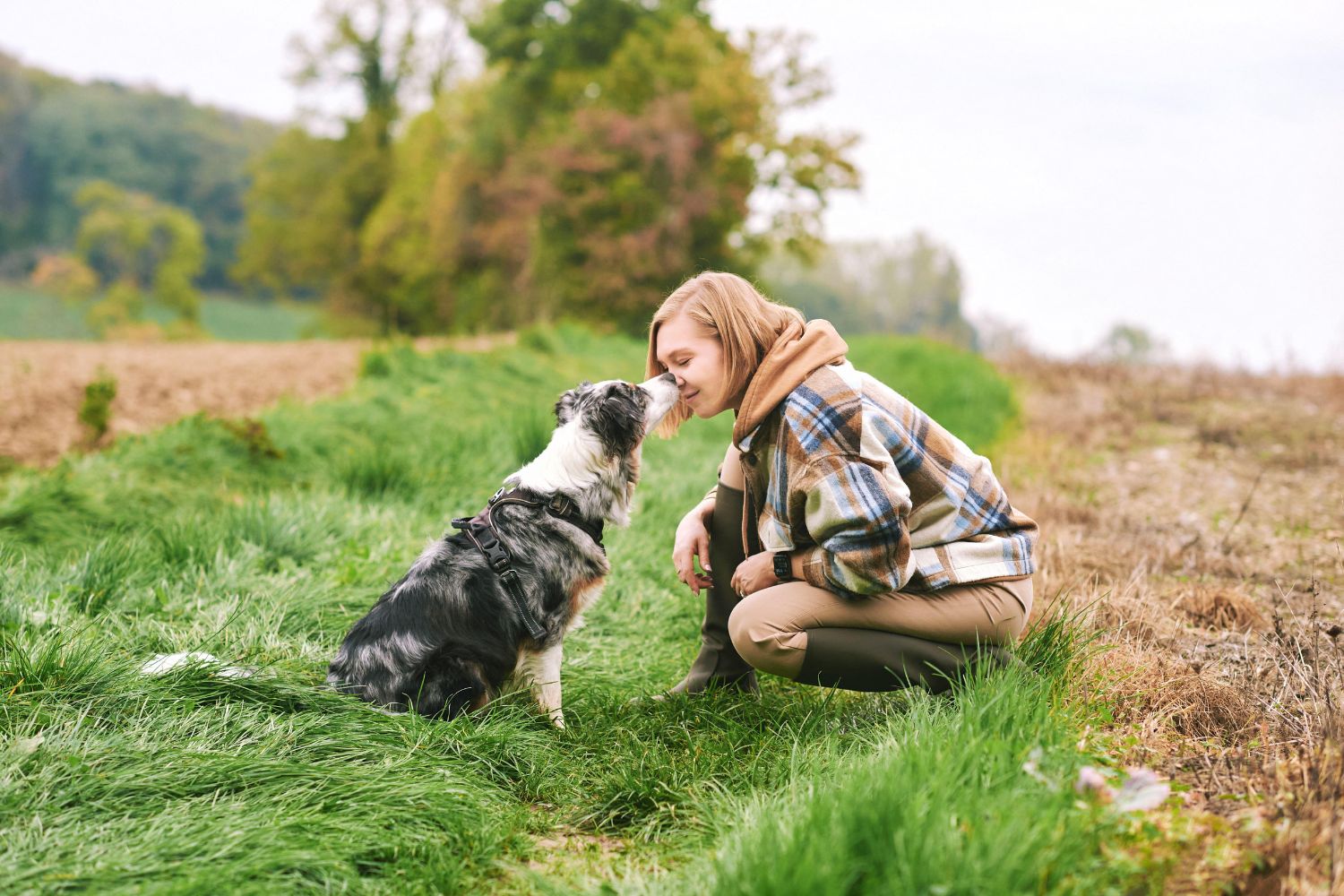
Image by Anna Nahabed on Alamy.
We call them ‘man’s best friend’, and the evidence supports it. Dogs have been found buried alongside humans in graves dating back 14,000 years. They appear in ancient art from every continent, and they feature in the mythology, religion and folklore of virtually every culture. Archaeological evidence shows they have helped us hunt, protected our homes, hauled our possessions, herded our livestock and provided companionship through the entirety of recorded history.
Today, there are more dogs living with humans now than at any point in history. We’ve bred them into hundreds of specialised forms, from chihuahuas that fit in a handbag to Great Danes that stand waist high.
But how did so many breeds emerge during these 15,000 years of co-evolution? In his new book, First Dogs: Hunter-Gatherers and their Canine Companions from Prehistory to the Present, archaeologist Professor Peter Mitchell reveals how dog domestication was a complex process in which both people and wolves likely participated – at least initially – as equal partners and how hunter-gatherer communities were absolutely central to this, long before other animals or plants were brought under close human control. The result was the evolution of multiple pathways of interaction as dogs developing specialised traits that closely matched the needs and environments of the human societies with whom they lived.
As Professor Mitchell puts it: “The connections between dogs on the one paw and people dependent on wild plant and animal resources on the other are ancient, diverse, and profound.”
Adaptation and survival across the world
From the Arctic tundra to tropical rainforests, dogs have undergone remarkable transformations that reflect the diversity of human cultures and environments.
This process of parallel evolution has produced animals as different as the compact, thick-coated sled dogs of the far north and the lean, heat-adapted hunting dogs of equatorial regions.
In the high-altitude regions of the Tibetan Plateau, both dogs and their human companions evolved similar genetic adaptations to cope with oxygen-poor air. Research has identified specific genes in Tibetan dogs that help them thrive at elevations where lowland breeds would struggle, mirroring adaptations found in human populations of the same region.
“We do not know when dogs first joined them, and the genetic variants needed to thrive there may have been quickly acquired, but until that was achieved hypoxia presumably acted as a constraint on canine presence,” Professor Mitchell explains.
Perhaps nowhere is the human-dog relationship more specialised than in the Arctic, where Indigenous peoples developed sophisticated dog sledding cultures.
Archaeological evidence reveals that Arctic dogs evolved distinctive skeletal features related to their role as draft animals, including specific patterns of vertebral stress and robust limb bones capable of withstanding the demands of pulling heavy loads across frozen landscapes.
These northern dogs weren’t merely tools for transportation, they were integral to survival strategies that allowed humans to thrive in one of Earth’s most challenging environments. The relationship was so close that dogs and humans often shared similar diets, as revealed by stable isotope analysis of ancient bones, with both consuming predominantly marine resources in coastal regions.
In stark contrast, dogs living with hunter-gatherer societies in tropical regions evolved very different characteristics. In the rainforests of South America and Southeast Asia, dogs developed as specialised hunting partners, with enhanced abilities to track game through dense vegetation and navigate complex terrain.
These tropical dogs typically remained smaller and more agile than their northern counterparts, traits that proved advantageous in forest environments. Ethnographic accounts describe how Indigenous peoples carefully managed breeding to maintain these hunting abilities, selecting puppies that showed promise and perhaps sometimes even cross-breeding with wild canids to refresh desired traits.
The diversity of dog forms worldwide reflects not just environmental adaptation but also cultural preferences and specific functional requirements. On the Northwest Coast of North America, for example, some Indigenous groups even bred small, woolly dogs specifically for their hair, which was woven into ceremonial blankets – a unique example of dogs serving a textile rather than hunting or transport function.
In other regions, dogs played crucial roles in spiritual and ceremonial life, leading to selection for particular physical characteristics or behaviours deemed culturally significant.
Disease as a constraint
Research is also starting to highlight how vector-borne diseases may have significantly constrained dog distribution and evolution in certain regions. In sub-Saharan Africa, for example, diseases such as trypanosomiasis and ehrlichiosis created barriers to dog populations, potentially explaining why dogs (a temperate to Arctic northern hemisphere species in origin) arrived relatively late in tropical regions of the world and areas to their south, or remained less common there than in temperate zones.
This disease factor adds another layer to our understanding of how dogs evolved differently across the globe – not just adapting to what was present in their environment, but also being shaped by what was absent or hostile to their survival.
Genetic legacy
Modern genetic studies reveal that many ancient dog lineages have been lost, replaced by European breeds that spread globally during colonial expansion. However, traces of these original populations still persist in some regions, offering glimpses into the deep history of human-dog co-evolution.
The story emerging from archaeological, genetic and ethnographic evidence is one of remarkable flexibility and adaptation. Dogs didn’t simply follow humans around the world – they evolved alongside them, developing specialised traits that made them invaluable partners in diverse ecological and cultural contexts.
This parallel evolution reveals the ways in which humans and dogs have shaped each other’s biology and behaviour over millennia.
As Professor Mitchell explains: “The process whereby grey wolves became dogs is ongoing, not one marked by a single threshold event. It was likely both long and drawn out.
“The relationship thus constructed has been a joint effort, if one where, especially in the West and over recent centuries, humans have increasingly come to dominate in determining its shape and direction.
“Nevertheless, the way dogs and humans relate – and have related – to each other has value precisely because their mutual, complex entwinement with each other.”