Radical reform of resident doctor training required to reduce prescribing errors, UK parliamentarians told
Taylor & Francis policy briefing at Sense about Science Evidence Week highlights positive impact of feedback in education programs
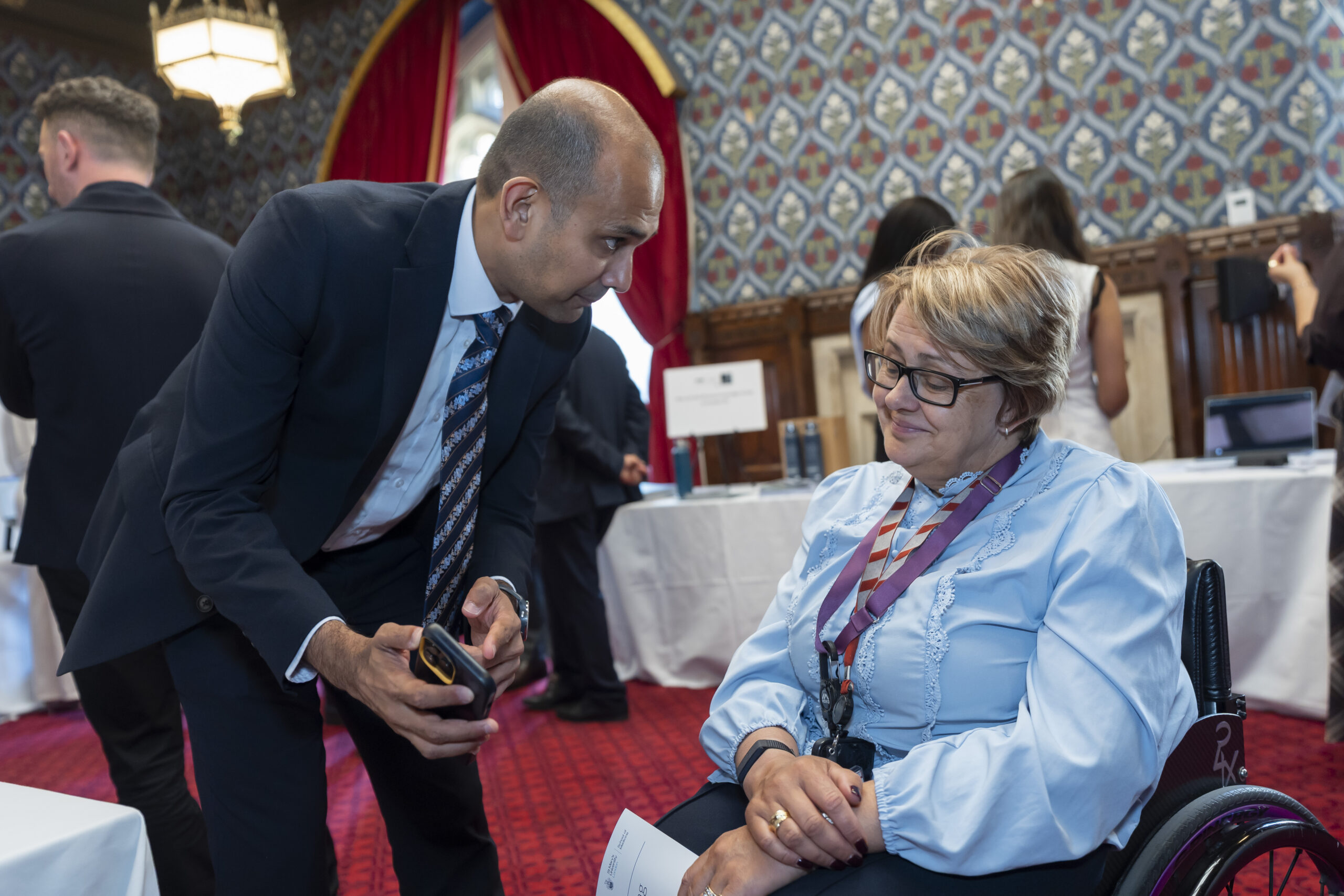
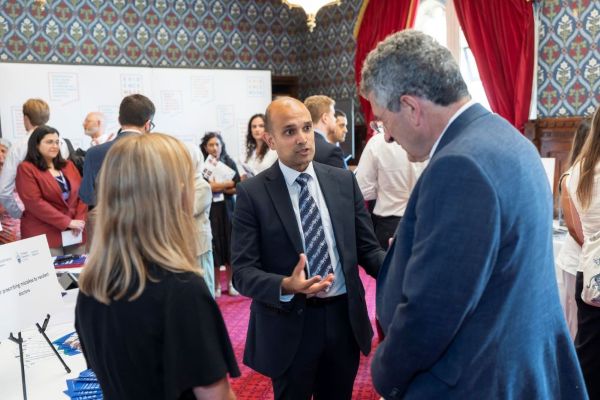
Professor Rakesh Patel (left) briefs Baroness Grey-Thompson on his research. Image credit: Sense about Science
A cost-effective training intervention that halves prescribing errors by newly qualified doctors has been presented to UK parliamentarians, highlighting a need for radical reform of medical education to protect patient safety.
In their first two years after graduation, resident doctors are currently twice as likely as other healthcare professionals to make prescribing errors. However, evidence presented by Taylor & Francis during Sense about Science Evidence Week demonstrates that incorporating structured, video-enhanced feedback into training programs can dramatically reduce these mistakes.
Taylor & Francis partnered with Rakesh Patel, Professor of Medical Education and Director of Undergraduate Medicine at the School of Medicine, St Mary’s University, to highlight the policy implications of his research, published in the journal Medical Teacher.
Professor Patel and his co-authors investigated the impact of incorporating personalized, structured, video-enhanced feedback into resident doctor training. The study found that this approach closes the performance gap between novice and experienced prescribers.
The intervention is cost-effective and scalable, demonstrating how evidence-based educational design can drive measurable improvements in clinical practice and patient outcomes.
Several key policy implications were presented at Evidence Week, including the need for accreditation of prescribing competence to shift emphasis from covering the curriculum, or passing an examination alone, to also demonstrating safe prescribing performance metrics in practice.
“This evidence makes clear that education without structured feedback is not enough. Newly qualified doctors need training that develops safe prescribing behaviours in real clinical uncertainty, supported by personalised feedback and performance data,” said Professor Patel. “Scaling this approach across Foundation Training would be a practical, cost-effective step towards reducing avoidable harm and improving patient safety across the NHS.”
Professor Patel added: “I was really encouraged by the interest shown by parliamentarians in this vital topic and I hope they will seriously consider the clear policy implications, in the interests of patients and resident doctors themselves.”
Evidence Week, now in its ninth year, is run by the campaigning charity Sense about Science, in partnership with communities and research institutions from across the UK. During the week, MPs meet with leading scientists to get the latest insights on pressing issues covering topics as varied as clean energy to AI sovereignty. It is an opportunity for the public, parliamentarians and researchers to come together to share knowledge and insights.
Tracey Brown, Chief Executive of Sense about Science, said: “Between elections, Parliament is responsible for the checks and balances on government policy, for making sure that policy matches the real world and that it is based on sound evidence. Evidence Week offers politicians the chance to engage with leading research groups to discuss their latest findings and tools in rapid-fire briefings that fit between parliamentary business.”
Visitors to the Taylor & Francis Evidence Week pod included Dr Peter Prinsley MP, Baroness Coffey, Baroness Grey-Thompson, Baroness Stuart and The Lord Bishop of Manchester.
Watch on YouTube: Fewer prescribing mistakes by resident doctors